A material’s story begins long before it becomes a bag. At BOEWA, we work with invasive-species materials, leathers recovered from food production, and selected deadstock skins. Each brings its own purpose— a reason to look more closely.
Here are three things about each material we use:
Lionfish
An invasive reef predator. Native to the Indo-Pacific, lionfish have established populations in the Caribbean and western Atlantic.
Their prey includes native reef fish. Researchers have identified royal gramma, wrasses, parrotfish, and other native fishes in their diet.
Their spines are venomous. The venomous spines are separate from the skin used to make leather.
Further reading: Source 1, Source 2.
Carp
“Invasive carp” covers several species. In the United States, the term commonly refers to silver, bighead, black, and grass carp.
They have spread through major waterways. Their established range includes the Mississippi River and several tributaries.
Their effects differ by species. Black carp eat mollusks and can threaten native mussels and snails. The exact species matters when telling a carp leather’s story.
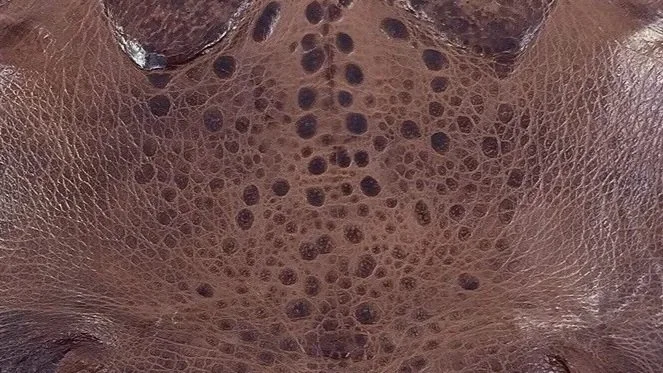
Cane Toad
They were introduced to Australia in 1935. The aim was to control agricultural pests.
Their toxins harm native predators. Animals such as quolls and goannas can die after trying to eat them.
They also compete with native wildlife. Cane toads eat a wide range of small animals and compete for food.
Further reading: Source 1, Source 2.
Burmese Python
They are invasive in Florida. Established populations live in and around the Everglades.
They are nonvenomous constrictors. They capture prey using their teeth and powerful bodies.
Their impact extends beyond predation. Burmese pythons also carry an introduced lung parasite that has spread to native snakes.
Further reading: Source 1, Source 2.
Iguana
Green iguanas are not native to Florida. They are considered invasive because of their effects on wildlife and the environment.
They mainly eat plants. Their diet includes leaves, flowers, and fruit.
Their burrows can cause damage. Digging can undermine seawalls, sidewalks, and other structures.
Further reading: Source 1, Source 2.
Salmon
The skin can become leather. Tanning transforms salmon skin into a usable material for accessories.
It can come from food-processing leftovers. Salmon leather projects have recovered skins remaining after seafood production.
Salmon have remarkable life cycles. Many species hatch in fresh water, grow at sea, and return to fresh water to reproduce.
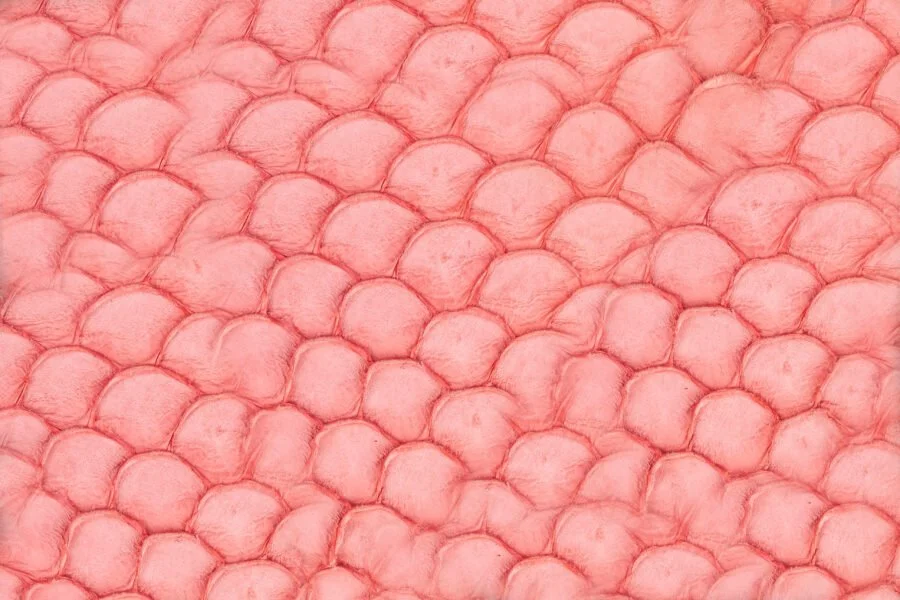
Tilapia
Tilapia skin can be tanned into leather. It is one of several useful materials recovered from fish processing.
The skin contains collagen. This structural protein is also studied for other uses, including food and biomedical applications.
Some tilapia protect their young in their mouths. Female Nile tilapia collect fertilized eggs and shelter them while they develop.
Further reading: Source 1, Source 2.
Chicken Leg
The texture is naturally distinctive. Chicken leg skin has a patterned surface that can resemble reptile leather.
It can be made into finished leather. Researchers have successfully tanned it and used it in leather products.
It offers another use for poultry by-products. Recovering the skin creates a material from a part of food production that may otherwise have little value.
Further reading: Source 1, Source 2.
Turkey Leg
Our turkey leather comes from the leg skin. It gives us a small, distinctive material to work into decorative details.
It appears in our collection as trim. Red turkey leg leather follows the shaped flap of our Crackle Cowhide Loreto.
Domestic turkeys have American origins. They descend from the wild turkey, a species native to the Americas.
Further reading: Source 1.
Ostrich Leg
Leg leather differs from body leather. An ostrich’s skin has different characteristics depending on whether it comes from the leg, neck, or back.
Leg skins can take a glossy finish. Glazing is a traditional way to finish ostrich leg leather.
Ostriches have unusual feet. They are the only living birds with just two toes on each foot.
Further reading: Source 1, Source 2, Source 3.
Deadstock Leather
Deadstock is a sourcing term, not a type of leather. It describes existing leather left unused, such as surplus stock, cancelled orders, or remnants from production.
It gives existing material another use. Working with deadstock makes use of leather that has already been produced rather than commissioning a new batch.
Availability can be limited. A particular color, texture, or finish may not be available again, making some pieces difficult to repeat.
